STS Mentorship Programme

Travel and guiding takes you down some new untrodden paths at times! This year, I agreed to provide a Mentorship through Scottish Travel Society (STS) a group of like minded people on STS Facebook site – all planning or aspiring to come to Scotland. What a great experience it has been! As a former Aussie, born into a Scottish family in Australia (my grand father was born in Scotland) I became part of the ‘Returned Diaspora’. We’ve lived in Scotland for almost twenty years, having travelled here on many return trips since back-packer days (having family in both countries). I have a deep love for the Scottish landscape, history and culture and fully endorsed ‘experience tourism’ for my mentoree ‘Claire B, from Australia’. My first surprise was to find that she came from Australia as had I, and that she lived in the same town as my father. Claire I am so glad you enjoyed your time in Scotland. She was so enthused about the trip, so willing to listen and to take on board recommendations, hints and tips when completing the trip template (and of course so keen to get it right)…….and she did! Her daily report photographs on STS were an inspiration to all the others from around the world currently planning their trips. I have helped many friends and relatives to plan and execute UK and Scottish trips, and had done extensive mentoring in the IT & Business Management spheres for many years. However this was my first time mentorship on the STS Travel Mentorship Programme. I have to say, I could not have asked for a better protégé! It was a thrill to finally meet her in person when she arrived in Inverness, and great to be able to show her some of the wonderful parts of our historically dramatic Highlands – giving particular time to her wish-list of Culloden Battlefield, Urquhart Castle ruins and Loch Ness. Unfortunately Nessie was not at home that day. We returned via beautiful Beauly to the Black Isle, with a short visit to the sunset shadows at the eerie Clootie Well at Munlochy! Claire then continued on her trip, loving every moment of it and using a range of transport mediums, and staying at a variety of beautiful accommodations through the Highlands, before her return travel to Australia. She started out as a travel novice, and first time lone traveller, but now has devoted followers on STS and has the expertise to confidently approach her  next trip. Claire I know you will return…..once here, you can never get it out of your system – the ‘pull’ is too hard. To my new and dear friend, enjoy the memories, experiences and photographs in the interim, but I know you will come again….’Haste ye Back’!

Queries / Bookings:

Ross & Robyn RobbieMac Tours & Ancestry Services © 2021

Visiting Scotland after BREXIT

CURRENT GUIDANCE FOR ‘EU VISITORS’

Latest information for travellers (from Visit Scotland):

The UK left the EU on 31 January 2020 and has entered into a year-long transition period, as the UK and EU negotiate their future relationship. During 2020 nothing will change in the way you visit Scotland. We’re open, and a holiday here will be just as magical as ever.

Scotland has breath-taking landscapes, unique experiences and charming destinations, and our people are as friendly as always, ready to welcome you and show you around our fascinating country.

We’ve got all the practical information you need to plan a trip to Scotland in 2020, plus a few ideas that deserve to be on any itinerary, whether it’s your first trip or your tenth you’re planning!

Top tip: please ensure you check the UK Government latest information before you travel.

ANSWERING YOUR QUESTIONS

Do I need a Visa to visit Scotland after BREXIT?

The UK left the EU on 31 January 2020, but arrangements for EU nationals visiting Scotland (and the rest of the UK) remain unchanged during the transition period.
The transition period lasts until the end of 2020 so these arrangements will be unlikely to change until the start of 2021.

What will I need to show to enter Scotland after the UK leaves the EU?

What you need to show at the UK border has not changed.

You’ll need to show a valid passport or national identity card if you’re a citizen of either:

  • An EU country
  • Iceland, Liechtenstein, Norway or Switzerland

Other citizens will need to show a valid passport.

You can still enter the UK using a passport which expires in less than 6 months.

What about school groups visiting Scotland?

Non-EEA national school children resident in the EEA or Switzerland will continue to be able to travel to the UK under the List of Travellers scheme until at least 2021.

What school children need to show at the border will not change. Pupils with their own travel document must be included on the List of Travellers form. Pupils without their own travel document must also have photographic ID or a recent photograph attached to the List of Travellers form.

To be acceptable as a travel document, the form must also be authenticated by the responsible authority in the appropriate member state to confirm the pupil’s residence status and their right to re-entry.

Read the UK Government’s advice for school groups.

Can I bring a pet to Scotland with me?

Pet owners will be able to travel with their pet between the EU and the UK under the current EU pet travel rules using a current UK-issued EU pet passport or a pet passport issued in an EU 27 Member State. If an owner is travelling with their pet for the first time they will have to visit their vet to get a pet passport.

What changes are there to what I can bring to Scotland?

There are no changes to what food or plants you can bring, or what you can have in your hand luggage.

Will my European Health Insurance Card still be recognised?

EU citizens are still able to use a valid EHIC card until at least 2021.

The rights of individuals covered by the citizens’ rights agreements with Norway, Iceland, Liechtenstein and Switzerland will not be affected.

Note: The EHIC is not an alternative to travel insurance and you should have both when travelling to the UK.

Travel to Scotland

Will travel to Scotland change at all?

Flights, trains, ferries and coaches will continue to operate between the EU and the UK, and vice-versa. Passengers across the continent can continue to book and travel with confidence as they travel on their holidays to the UK.

Make sure you have the correct travel insurance and check the terms and conditions before heading off.

While you are here

Can I bring my car and drive in Scotland?

The rules on driving in Scotland remain the same. Your EU driving license is still valid.

Will be able to use my mobile phone in Scotland?

You’ll pay the same for calls, texts and mobile data in the UK and the EU if you have a SIM card issued by a mobile phone network from an EU or EEA country.

For the latest information, please see the UK Government advice for visiting the UK after Brexit.

RobbieMac Genealogy Research & Tour Services

‘WALK IN THE FOOTSTEPS OF YOUR SCOTTISH ANCESTORS’

Latest News! RobbieMac, your registered ancestry researcher and tour guide, is now officially listed on Visit Scotland Ancestry site. 

I have been a genealogist formerly in Australia from 1983, and now live in Scotland and have offered services in the UK for 20 years. The ancestry services have been merged into our tour guiding services, and I am certified and registered, as follows:

  • Caithness Family History Society
  • Genealogy Society Scotland
  • Association of Professional Genealogists
  • Visit Scotland Ancestral Services
  • HOSTGA Tour Guide
  • STGA Tour Guide

 Ancestry Experience – The past is very accessible in Scotland, and a special experience awaits those who come here to ‘walk in the footsteps of their ancestors’. Others may wish to take things a step further by undertaking genealogical research before or while in Scotland. 
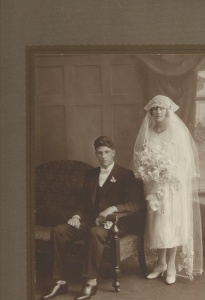
Growth of Ancestry Tourism – Believe it or not, there are an estimated 50 million people worldwide who lay claim to Scottish ancestry. The largest concentrations of people with Scottish ancestry are in Australia, Canada and North America. 

The explosion in DNA-based ancestry and the high profile books, films and TV shows featuring Scotland, such as ‘Outlander’, have brought Scots ancestry to the fore like never before.

Returning Scots Diaspora – I am one of those ‘Returned Diaspora’ who returned from the colonies, in my case Australia, to live in Scotland the home of my ancestors. My grand father was born in Scotland. I now spend my time helping people with their ancestral queries and research, and developing bespoke tours.

Discover Scotland – like your ancestors would have done, follow in their footsteps and uncover fascinating history and captivating stories. Does your family have connections to one of Scotland’s well-known clans or septs?

Learn about where in Scotland the clans have their ancestral roots (there’s plenty of clan maps on the internet), or find which castles are connected to which clans and discover these stories for yourself.

Take note, just because someone carries a certain clan name does not mean that by blood they are connected. In early times, if you worked for or came under the protection of a clan chief, or fought for him, you could have adopted his name.

Plan the holiday of a lifetime – visit those towns, villages, churches and streets where your Scottish ancestors would have once walked. Or why not visit the variety of historic battlefields across the country, each offering a unique glimpse into the past and the part some of your ancestors may have played.

But that’s not all – there are plenty great events and festivals with ancestral connections to enjoy, including Clan Gatherings, Highland Games, Piping Championships and Military Tattoo (particularly in summer July – August). 

Tracing your family tree – There is a certain amount of basic research you can do on your own, even if you do not have advanced genealogy skills or experience. Whether you’ve got your full family history and ancestry traced, want to find out more, or simply feel a connection with Scotland, do contact me by email or online form.

Ancestry Research and Genealogy Tours – At RobbieMac Tours and Ancestry we can prepare personalised ancestry and tour itineraries which can include research into your family name or Scottish Clan that you may have connections with. 

Walk in the Footsteps of Your Ancestors – Let RobbieMac help you to ‘walk in the footsteps of your ancestors’ with a bespoke Ancestral Tour of the Highlands, Scotland – provided by a passionate and knowledgeable tour guide, historian and genealogist.

Robyn Jobson, RobbieMac Tours & Ancestry. 

Email:   info@robbiemactours.co.uk

Mobile: (0044) 07854638268

Office: (0044) 01955611522

Hitting a brick wall with your ancestral research?

Something to bear in mind – Scotland has a long embattled past – with deaths, emigrations or burials from anything including: the industrial revolution and it’s impact on employment opportunities; potato famines; the Highland Clearances which drove many off their crofts to the colonies when they were replaced by sheep by the large land owners; the Jacobite rebellions and the Battle of Culloden where many lost their lives fighting for or against Bonnie Prince Charlie; multiple wars including the two great World Wars; and lesser known great Spanish influenza (causing 50 million deaths worldwide) in 1918-1919.

Research can be challenging in some instances and not in others! Not everyone necessarily belongs to a Clan. Just because you have Clan surname in your ancestry, this may not prove that you have a real clan connection.

Why? Because, when people took surnames in the 1100s – previously they had single names like Henry the farmer. Many took up their trade, locational or occupational surnames. In Scotland, if you had fought or worked for a Clan Chief, then you were ‘one of his men’ might have taken his surname to show solidarity or protection.

Many can be surprised to find they are ‘Scots-Irish’ and this opens up a whole new avenue of research for us. During hard times, people tended to move back and forwards from Ireland.

Or as in some cases DNA tests have revealed they have Viking roots! There are strong Norse connections in the far north due to the Caithness proximity to the Orkney Islands, a stronghold for the Vikings for many years. The Vikings arrived in Orkney in the late 8th century – and remained for another 500 years. Scottish Clans with direct Viking (Norse) descent are: Gunn, MacDonalds of the Isles,MacLeod, MacQueen and MacAuley.

Earlier than the Vikings, were the Pictish tribes (the Catti) across Caithness. They left us some wonderful brochs and cairns starting about 5,000 years ago. They also left a trail of beautifully carved standing stones, but alas NO written records! Now if you have family members with black eyes, black hair and olive skin and you originated from the far north historically, then you could be forgiven for thinking you might have Pictish bloodlines.

And just when you think you have explored all genealogy avenues, then consider the Celts and their connection to Scotland!

Wha’s like us? Damn few’ and they’re A’ deid

This came my way this week, and I just had to share it with you…..Wha’s like us? Damn few’ and they’re A’ deid!

The typical English man in his home he calls his castle, finishes his breakfast of toast and MARMALADE invented by Mrs Kieller of Dundee Scotland, and slips into his RAINCOAT patented by Charles MacIntosh from Glasgow Scotland.

He walks to his office along an English lane which is surfaced by TARMAC, invented by John Loudon Macadam of Ayr Scotland- or he drives his English car which is fitted with PNEUMATIC TYRES patented by John Boyd Dunlop of Dreghorn Scotland.

Before he acquired a car he used to travel to his office by train which was powered by a STEAM ENGINE invented by James Watt of Greenock Scotland.

In his office he deals with the mail bearing ADHESIVE STAMPS invented by John Chalmers of Dundee Scotland, and makes frequent use of the TELEPHONE invented by Alexander Graham Bell born in Edinburgh Scotland.
At home in the evening he dines on his favourite traditional ROAST BEEF from Aberdeen Angus raised in Aberdeenshire Scotland and the watches an item on the TELEVISION an invention of John Logie Baird of Helensburgh Scotland.

His son prefers to read TREASURE ISLAND written by Robert Louis Stevenson born in Edinburgh Scotland, whilst his daughter plays in the garden with her BICYCLE, an invention of Kirkpatrick MacMillan, of Thornhill Scotland.

It is impossible for an Englishman to escape the ingenuity of the Scots!

In desperation he turns to his BIBLE only to find that the first person mentioned in the good book is a Scot King James VI, who authorised it’s translation.

He could of course turn to drink, but Scotland makes the finest WHISKY in the world. Nearing the end of his tether he could uplift a rifle to end it all but the BREECH LOADING RIFLE was invented by Captain Patrick Ferguson of Pitfours Scotland.

Anyway if he escaped death he could find himself injected with PENICILLIN discovered by Sir Alexander Flemming Bacterialologist of Darvel Scotland, or given CHLOROFORM, an anaesthetic first used by Sir James Young Simpson of Bathgate Scotland.

Out of the anasthetic his mood would not be improved if he’s surgeon told him he was as safe as the BANK OF ENGLAND founded by William Paterson of Dumfries Scotland.

Perhaps, in order to get some peace, he should request a transfusion of guid Scottish blood so he to would be entitled to ask…
Wha’s like us?

Damn few and they’re A’ deid!

Gabaldon’s Highland Odyessy

This is a blog for our Outlander fans who are interested in the historic aspect of Diana Gabaldon’s ‘Outlander’ series.

It seems to be a trend until now, that visitors came to Scotland with the agenda of going to see the ‘sets hired for the films’ and not the real locations.

My agenda has been to spread the idea of coming to the Highlands and visit the ‘real sites’ visited by Gabaldon when researching for her story and those that figured in the tragic history of the Highlands.

This was to be the setting for the love story between Claire Randall, a married woman and Sassenach (an outlander)  and Jamie Fraser a young highlander in ‘Outlander’ the first in her famous series (initially called Cross Stitch).

Gabaldon spent a great deal of time in the Inverness area understanding the Highlands torn by war and clan feuds.

The ‘real’ Outlander connections tour would include: Culloden Battlefield, Clava Cairns, The Gaelic Church and Old High Church Inverness for starters. Depending on what length tour, you choose, you can be transported through time following Claire from the first very beginning, through the Battle of Culloden which was central to the story, and the agonies of post Culloden.

It’s a long complex story, and not easily experienced in one day tours! Next to design a followup to the popular one dayer. Watch this space.

Will BREXIT affect your holiday in Scotland?

Some great info and clarity from the people at TUI regarding the impact of BREXIT on your holiday in Scotland. In short – no worries, just go ahead and book!

How will ‘BREXIT’ affect my holiday?

Whether you’ve already booked your holiday, or cruise, or you’re just thinking about planning your next getaway, you’re probably wondering what Brexit will mean to you.

Should I be concerned about my holiday with the uncertainty of Brexit?

We understand you may be anxious to find out more about what may happen with Brexit, to help you plan your holiday. The good thing to know is that the European Commission has said that planes leaving from the UK will still be allowed to fly over the territory of the European Union, even in a no-deal scenario. So you can rest assured that your flight should still go ahead as planned. Tour operators will continue to operate tours to all destinations, including those within the EU, so you can still book holidays with confidence.

Will flights still operate?

You can rest assured that, regardless of the Brexit outcome, planes will still be able to fly between the UK and the EU. When and if a deal is agreed, we’ll go into a transition period, meaning everything will stay as it is until the end of December 2020 and flights will continue as normal. Even in the case of a no-deal scenario, the European Commission and UK government have said that UK airlines will still be able to operate flights between the UK and the EU. The UK government has also agreed that airlines operating out of the EU will be able to fly into the UK.

Will I need a visa to travel to the EU after Brexit?

On 4th April 2019 the European Parliament approved legal changes to ensure that UK citizens will not need a visa to travel to the EU for short stays after Brexit – even in the event of a no-deal exit. ABTA is also providing advice to travellers about visiting the EU after Brexit, with the latest information available at: abta.com/Brexit.

What happens if I book to travel after 31st October 2019

There is nothing to suggest that you won’t be able to continue with your holiday plans after 31st October. Even in a no-deal scenario, the European Commission and UK government have said flights to and from the UK will still be able to operate. Customers who book a package holiday with a UK travel company can relax knowing that they’ve got the most comprehensive protection as a consumer. If you book a package, your holiday will be protected under the Package Travel Regulations, meaning you’ll have the right to a full refund if your holiday can no longer be provided.

Will I still be able to use my current passport?

For all customers who have holidays booked with us from 31st October 2019 onwards, we advise you make sure your passports are valid for at least 6 months after your departure date, which will ensure you are able to travel in the event of a no-deal Brexit. These regulations will apply to adults and children. Also, if your last passport was renewed before it expired, extra months will have been added to your new passport and these may not count towards the six-month minimum. We strongly advise you check your passport and renew it if necessary, so that your holiday is not affected in the scenario of a no-deal Brexit. You can do this on the government’s website.

Will my cruise be affected by Brexit?

The government has confirmed that cruises will continue as normal after 31st October 2019, even in the event of a no-deal Brexit.

Thanks to TUI Travel, May 2019.

RobbieMac gains Visit Scotland Accessibility Management accreditation!

RobbieMac gains VisitScotland Accessibility Management accreditation.

During recent months RobbieMac has completed Visit Scotland Accessibility Management accreditation!

What does this mean, you ask? This will help us to make our tours accessible and inclusive. Inclusive tourism is hugely important to us, and we are committed  to designing tours and providing services that benefit the widest range of visitors possible.

We are keen to improve our customers’ enjoyment, inclusion and satisfaction! Meaning that our additional services and bespoke accessibility tours will benefit a wider range of people i.e. those with hearing loss, mental or visual impairments, wheelchair users, senior travellers or families with young children.

We are currently working with local businesses to formulate the accessibility services they offer, to allow us to wrap special ‘Caithness Experience’ tours around that. Watch this space….