Come to Caithness to see ‘The Mirrie Dancers’

What are the Mirrie Dancers?

Well, let me tell you about the ‘Mirrie Dancers’ of the north . Where you come from, you’ve probably known them by the more familiar names of Aurora or the Northern or Southern Lights. However the Caithness term for them is ‘The Mirrie (Merry) Dancers’. Contact us for more information. No doubt you’ve seen posts I’ve shared on Facebook from brilliant regional photographers with magical glows of white, green, pink or purple glowing in the dark midnight skies over Caithness or the Northern Highlands. If you would like to see great photos of the ‘mirrie dancers’ by a local, I certainly recommend you seek out Marceij Winijchek’s photography on Facebook! Yes, the lights or mirrie dancers can be seen elsewhere around the Highlands or the rest of Scotland…… but where, just depends on where the coldest, clearest night sky can be found (no lights, no cloud, no rain)! Wow, there have been sightings of the mirrie dancers this week, from Caithness to the Islands to the north and the west of us! I was lucky enough to see them too, at around 3:00am on two consecutive mornings. Amazing and so unexpected as there has been rain and cloud for days on end – quite a show out over the Pentland Firth, with rays with pulsing spikes in a purple, green and lots of white…..and my camera battery was flat (considered essential to get the special settings needed)! But they do not always look like the photos, to the naked eye. In actual fact the aurora if showing in all its’ glory, is best captured on really long camera exposures, out on very cold still, clear nights with a dark glow. If you do see any green, then that’s the oxygen, struck by electrified particles from the sun. The further north, the greener it is (particularly in the islands and Far North Caithness) – just as we saw it that first time of our life, in magical Lapland’s Arctic skies. The pinks and purples make great photographic contrast but tend to be seen more the further south in Scotland you go. If you strike it lucky the Mirrie Dancers can flicker and dance across the sky, or simply glow like a well lit city. The sense of wonder is hard to describe! It has been reported that some hear a slight buzzing sound comparing it to the rustling of silk – but we’ve never heard it. While the Sami, the traditional people of Lapland say that it sounds like reindeer leg joints when they run! Be prepared for an incredible experience. It will touch your heart and leave you speechless. Seeing them with your own eyes somehow changes your view of the world, of nature and of life.

Can we see them anywhere?

Yes, though they are seen more frequently at higher latitudes and places closer to the poles. To view them, find a dark area and stand with your back to any lights – and look in the direction of the closest pole (obviously, the northern horizon in the northern hemisphere, the southern horizon in the southern hemisphere).

Can we see them at any time?

Yes, but here in Scotland we can’t see them with the naked eye unless it’s dark so wait for long, cold, dark sky nights in our winter – noting that we have really short days in winter, as it starts to get dark from around 3:00pm. Generally expect to see the dancers in the depth of winter from December to February, though like this year they can be visible earlier, starting around September if there’s an early cold spell of weather.

What causes the colours and patterns?

Now lets get real techie here! Colours and patterns are from the ions or atoms colliding with the atmosphere and are affected by lines of magnetic force. Displays come in many forms, including rippling curtains, pulses of waves, or steady glows and flares.

What is the difference between the Northern Lights and Southern Lights?

Actually both the northern and southern lights are types of Auroras (and the aurora is the mirrie dancers to us). The difference? One occurs near the south pole, and the others in the north.

Aurora Facts

• Auroras have been observed since ancient times. • Auroras tend to be more frequent and spectacular during high solar sunspot activity, which cycles across approximately every twelve years. • Some auroras are particularly spectacular (see local newspapers and Facebook). • Legends abound in northern cultures to explain the dancers/aurora/northern lights. • 1896, a Norwegian theorised that auroras were triggered by electrons from sunspots. • Scotland is the capital for UK aurora sightings, and Norway for European sightings. • Earliest known account of northern lights appears to be from a Babylonian clay tablet from the official astronomers of King Nebuchadnezzar II, 568 BC.

Caithness Dark Sky Discovery Sites
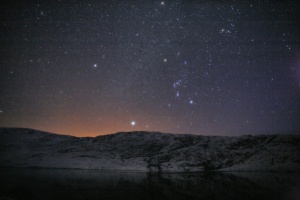
Where is our best local spot to star gaze? Well in Caithness it is far closer than you think……The Castlehill Heritage Centre in Castletown only ten miles away from us here in Canisbay, is a designated dark sky Discovery Site. Viewing is just great down at the Harbour behind the building and overlooking the Pentland Firth and Orkney in the background. Designated Dark Sky Discovery Sites are a nationwide network of UK locations that provide great viewing opportunities and are accessible to everyone.

Caithness Astronomy Group list of Highlands Dark Sky Discovery Sites

Camas na Sgianadin – Broadford, Isle of Skye, IV49 Castlehill Heritage Centre –  Castletown, Caithness, KW14 8TG (our local site) Clan Donald Centre – Armadale, IV45 8RS Glen Canisp – Lochinver, Sutherland, IV27 4LW Isle of Coll – Arinagour, Isle of Coll, PA78 Isle of Coll – Cliad Football Pitch, Arnabost, Isle of Coll, PA78 Isle of Coll – RSPB Totronald, Coll, PA78 6TB Jim Savage – Lowden Observatory, Culloden Battlefield, Culloden Moor, Inverness, IV2 5EU Knockbreck – Tain, Gillen, IV55 8GP Kylerhea – Otter Haven Car Park, Kylerhea, IV42 8NH Leitir Easaidh – Little Assynt, Lochinver, IV27 Stein Jetty – Stein, Isle of Skye, IV55 8GA Observatory – Kinloch Forest, Isle of Skye, IV43 8QY Trumpan Car Park – Trumpan, Isle of Skye, IV55 8GW Walk and Wild – Melvaig, Wester Ross The Putechan Hotel – Bellochantuy, Argyll, PA28 6QE

What else can we see in the night sky?

As they say, a clear night sky offers an ever-changing display of fascinating  ‘sky watching’ — in addition to the mirrie dancers, you could see stars, constellations, bright planets, the moon, and occasionally meteor showers or even the International Space Station. As the third brightest object in the sky the space station is easy to see if you know what to look for, and when to look up. It looks like a bright star moving quickly from horizon to horizon. However as suddenly as it appears, it disappears. It is due back in UK skies in November 2020. UK Space Station Timetable: https://www.glosweather.com/isslive (‘google’ for other countries). Observing the night sky can be done with no special equipment, although a Sky Map can be very useful: https://www.timeanddate.com/astronomy/night/@2641342 (search on the name of nearest town to you). While you’re at it, check out the Aurora Watch UK site to prepare yourself for the experience – before you come. This is truly one of the most overlooked but interesting activities in Caithness! Contact us regarding accommodation or tours (private or group) during your winter breaks in the Far Northern Highlands of Scotland. Why not tie it in with a North Coast 500 tour, or a quiet staycation, or research your family ancestry and ‘walk in the footsteps of your ancestors’! Photography with thanks to: Visit Scotland, The Scotsman & R Jobson. ♥ RobbieMac, Your Highlands’ Guide  

Queries / Bookings:

Ross & Robyn RobbieMac Tours & Ancestry Services © 2021 RobbieMac Tours © 2020

Caithness Legend – The Selkie of St Trothans, Olrig

Caithness Legend – The Selkie of St Trothans, Olrig

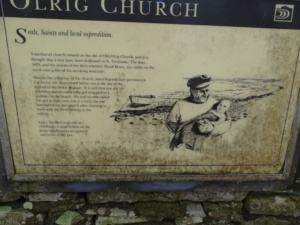
Did I really feel a frisson of excitement or was it nervousness as my friend and local, Jennifer and I pulled open the gate at the entrance of the Olrig Cemetery with its’ old ruined Kirk of St Trothans at Olrig, not far out of Castletown. While I had heard the local stories about a ‘selkie’ grave, I hadn’t managed to find this grave on my own accord until now.

Olrig Cemetery

At Olrig there are effectively three cemeteries bounded by old stone walls – the ancient, the quite old and the modern! The name Olrig derives from the Old Norse meaning ‘son of Erik’  – around the time when Caithness was called Katanes and  it, and Orkney and Shetland were all part of Norway.

The roads and church are signposted, but it took help to find the way to the grave. It goes without saying, that the influence on locals’ lives by the church was strong in those times, and legends and stories were common, no more so than in Castletown.

So before I go further, what is a selkie you may well ask?  The word selkie means ‘seal’ in both Old Scots and Norse and of course Caithness was a major player in the Viking Kingdom.

Legend of the Selkie

Selkies are mythological shapeshifting (the word used today is morphing) creatures that are also found in Faroese, Orkney, Shetland, Icelandic, Swedish, Irish and Scottish folklore. The Caithness selkie was half-woman, half-seal and she is buried in the ancient graveyard in Olrig. In some parts they are also referred to as sylkies, selkie folk and in Shetland as mermen or merwomen.

According to the old stories, selkies were able to become human by taking off their seal skins, and can return to seal form by putting it back on. Stories about the selkies are romantic tragedies and vary slightly from place to place!

Sometimes the human will not know that their lover is a selkie, and just wakes one day to find them gone. As many have heard, that any children produced by a selkie-human union could be distinguished by having hereditary webbed hands and feet. The selkie mothers would nick away at the web in an attempt to be rid of it, and thus keep the secret from others! There are still families or descendants of families who actually believe they have these hereditary selkie traits.

Castletown Myths and Legends

The Castletown legend is the most common story of the man who steals a female selkie’s skin when he finds her naked on the sea shore. He compels her to become his wife. But the wife spends her time longing for the sea, and was often seen gazing longingly at the waters. She bears several children by her mortal husband, but once she discovers her skin, the pull is too hard and she immediately returns to the sea and abandons the children she loved.

However in one children’s version the selkie revisits her family on land once a year, but in the more common version she is never seen by them again.

Sometimes the human will not know that their lover is a selkie, and wakes to find them returned to their seal form. In one version, the selkie wife was never seen again by her children, but the children would sometimes see a large seal that would come up and greet them plaintively. Other times the common version, the human would hide the selkie’s skin, preventing them from returning to seal form.

The Selkie Grave

Now back to our selkie grave ….. there is a plaque on the cemetary gate with the legend.  Read and enter! The ruins of St Trothans which was built in 1633, are now well hidden in the trees and the whole place has an eerie sense about it! That isn’t helped by the fact that the ruinous walls are also quite overgrown with ivy which seems intent on taking it over forever!

But we were on a mission. To find it…..as you enter the cemetery gates, walk straight ahead then turn toward the ruins. The more noticeable pirate graves are on the ground, lying flat, with a skull and crossbones on. Some believe them to be either criminal or Masonic graves – but who knows. They lie about two or three rows away from the old church and close to the selkie.

Opinions vary, but pirates sounds much more romantic to me given that Castletown is on the Pentland Firth, a major and most dangerous tidal waterway –  and with many stories of piracy!

We get there and what a surprise – it is just a wee grave, child sized with a strange hole in the stone on top of it. Our selkie in this legend was apparently found as a baby swaddled in a sealskin. She was later banished from the kirk as a devil worshipper and ultimately died while giving birth to her first child.

The hollow on the stone to cover her grave, is said to never dry out. It is said that if you put your foot in the hole and make a wish it is supposed to come true, or that it will rain! Depends on who tells you the legend of the selkie.

What I do know is that if you put your hand in the hole it gets wet and no, it didn’t rain that day!

Other similar Legends

One Scottish legend from another location, believes that selkies were creatures that can take the form of seals or humans, depending on whether they were in the water or on land. In that version the sellkie was a mermaid.

No matter where, when their seal-skins were discarded the selkies became extremely attractive to humans and it was not uncommon for relationships to form – with the selkie making the decision to stay on land. The folk-tales frequently revolve around female selkies being coerced into relationships with humans by someone stealing and hiding their sealskin, thus exhibiting the tale motif of the swan maiden type.

But no matter how strong the selkie’s ties with her mortal family were, she would always pine to return to the sea. So to avoid this possibility the men would steal the seal-skins and hide them. Without their skins, the selkies were trapped on land with their mortal family!

One legend tells of a selkie woman who had been married to her mortal husband for many years and had several children by him. One day, one of her young sons came across the seal-skin which had been hidden away in his father’s hiding place and, curious about what it was, took it straight to his mother. Delighted, she seized the skin from him, put it on and slipped back into the water – leaving her family, home and distraught husband behind forever. Such a sad legend no matter which version you hear.

Olrig the most haunted place in Caithness

On the way out, we passed an ancient stone collection container inside the gate! Olrig, incidentally, is one of the most haunted places in all of Caithness. Some believe that bad luck follows you out of that cemetery time and time again. Luckily I did not hear that part until much later on!

Local myths and legends are really fascinating and you can usually find an element of truth if you dig deep enough. I’ve since heard of a number of other Olrig and Castletown legends, including: a Mummy on the loose; The Valkyries in the hill; The Green Lady at Olrig House; ; the bagpipes of the Piper skirling at all hours on Windy Ha; the lost Kirk; and of course the Tunnel!

This is truly one of the most haunted places in Caithness! Ask about our tours!

♥ RobbieMac, Your Highlands’ Guide  

Queries / Bookings:

Ross & Robyn

RobbieMac Tours & Ancestry Services © 2021


All you need to know about ‘Whins’ aka Gorse!

Getting up close with Whins aka Gorse……..

Whichever name you know it as, either ‘whins’ in Scotland or ‘gorse’ from elsewhere, the prickly shrub smothered in sunshine – yellow blossom is an iconic plant of the heathland and rough open spaces when it is in blossom.

The hillsides in the Northern Highlands are a real treat to drive through particularly along the NC500 route – you can’t fail to notice the dramatic colour in the warmer months, commencing around Easter. It was the go-to plant to fulfil the many but simple needs of the ancients!

                  Whins along our Highlands roadsides

The flowers have a sweet coconut fragrance and are still used to make delicious drinks and desserts by enthusiastic foragers. The prickly shrub is a popular plant (read ‘weed’) and wherever it grows in quantity it is one of our great landscape vistas!

Whin bushes in flower make for great photographs in our Highlands countryside. Perhaps that is what inspired me to go foraging (during the long days of COVID lockdown before ‘easing’ started) and experiment for the first time with making whins ice cream last week……and my my wasn’t it gorgeous, as it tasted of coconut and a certain ‘je ne sais quoi’!

Top Tip: The flavour really matured by the second day!

By far the most popular household use was for dyes – green made from the bark and yellow from the blossoms. Did you know that dying cloth was considered a magical process, done only by women?  Meanwhile the men used it as a farm resource, and for hedging their fields to keep stock in and intruders out. Today you can still see it bordering many fields as you drive around the Highlands, and of course here in Caithness.

If driving north from Inverness to Caithness, do stop off the A9 on your way north, and take a walk over the hill to the clifftop ruins of Badbea clearances village on the clifftops!

The path to the ruins is lined with gorgeous whins!

The walk from the Badbea Clearance Village carpark over to the ruins can be a tad uneven – but the magnificent views of the North Sea and Oil Rigs, the dramatic cliffs, the sad Badbea ruins and monument, and the smell of coconut and amazing colours of the whins in flower make for a great photo opportunity. You’ll have some special memories when you become aware of the horrific story of the Highland Clearances – which was the reason people were driven here! Did you know that living on the clifftops was so dangerous that they had to tie children and young animals to stakes by ropes – to prevent them falling off the cliffs?

Talk about a super multi-purpose product! It was believed by the ancients that whins extended protective powers over the herds. They also boiled the seed pods, and used it as flea-repellent inside their wee butt and ben (2 room stone thatched cottage with dirt floors) which they shared with their few animals.  

Although a tedious task to grind the bush, it made great animal feed. However it was and still is an invasive plant and needs to be kept under control. By burning, it provided them with ashes which enriched the soil and encouraged plant growth. Ashes were also be mixed with rendered animal fats and made into multi use soap – but remember there were no bathrooms or baths as we know them!

Really, it was the first herbal tea and the seeds gave a ‘laxness to the bowels’!! It was also mixed with heather honey and used as a mouthwash. Can you imagine that as the honey probably helped to rot their teeth then causing more bad breath!

Burning torches of whins wood around cattle and other livestock was believed to enhance their fertility, and keep their coats clear of parasites. What self respecting bug would stick around! The wood was also used to carve eating utensils and provided great fuel for their cottage fireplace. The prickly bushes still make an important and safe habitat for birds, reptiles and many invertebrates.

Continue reading →

Packing for Scotland – what should I pack?


Scotland is quite casual! Basically, you can wear what you like. Smart casual will get you by almost anywhere, even on a night out – exceptions being for special occasions when the locals like to go in traditional dress ie a kilt and accessories.

The weather is famously variable – No two months the same….no two weeks the same….no two days the same! You can expect temperatures to average around 5°C (41°F) from autumn-winter- spring and although it does snow, it usually isn’t a lot in the cities and will rarely settle in many places in the popular larger cities Edinburgh, Glasgow and Inverness. Expect to see it sit on the tops of the high country.

Summer time June-July-August is generally warmer and has been known to hit 32°C but in the main ranges 15 -25°C. There can be 5°C difference in the temperature between John o’Groats and Edinburgh – the further north you go the cooler it gets. Heading further south, London can be 5°C less than Edinburgh too.

Number one rule for what to wear in Scotland – If there is ONE tip that I could give you when you’re planning your trip to Scotland is to take layers.

As much as I try to tell people the sun really does shine in Scotland, the weather is also very changeable and you’ll be thankful to have several different layers with you. And I’m not just talking about when you’re packing, I’m talking about when you’re out and about during the day.

General Scotland Packing List – If it is a bit overwhelming and you’re thinking, what to wear in Scotland question is really complicated – well here’s the packing check-sheet!

Think always of washing facilities before settling on only jeans as they are heavy and take ages to dry – it can sometimes be challenging to find utilities/laundries with washers and dryers as you move around!

Sweatshirts/Jumpers – Remember layering is key so you want something that’s warm but not too bulky, that fits under a coat. Just layer tops with a vest top, T- Shirts long and or short sleeved and/or jumper and just remove if and when you need.

Undies – You do not need thermals for most of the year. You only need thermals if you’re in the highlands in the winter and intend to be outside a lot – normally a simple vest top or t-shirt and standard trousers and good socks will do. In fact inside buildings they usually have the central heating cranked up in winter and you can even get quite hot in places – remember, always layer so that you can peel off if you need to.

Jeans/Trousers – Think about the activities you have planned and if you need water resistant clothing for outdoors. If you plan on going out somewhere fancy of an evening, then something slightly more fashionable – I just add a scarf or a wrap!

Save the kilts and tartans for weddings and functions. Don’t pack dresses – I don’t ever pack or wear a dress as it is so much easier to stay warm in trousers!

Coat/Jacket – Choose according to the weather, but consider something windproof, waterproof and with a hood – town or country. Try to find one with interior zip-in capability for a fleece. There’s always a great range to choose from, and they are stylish to boot.

Winter warmers – Think warm socks, a scarf or neck warmer, cap and gloves. Bring tights and leave in your day bag in case extra warmth needed – light, easy dry and quick fix for unexpected cold.

Boots/Shoes – I usually live in long boots from autumn to early spring – warm boots for winter or the cold. For summer consider footwear that can handle walking around both city and countryside – comfortable with safe soles, waterproof, and go with anything even at night. Do not bring sneakers as they will let water in and give you cold feet!

Dressy outfit women – Unless you’re planning a special dinner or night out it’s unlikely you’ll even need a dress here! Just a nice pair of trousers and matching top – add a scarf or wrap to always give a touch of glamour.

Dressy outfit men – For men, jeans or chinos plus any type of comfortable shoe or boot is fine!

Extras to Pack for Scotland – Aside from what to wear, there are a few extra things you should consider when packing for a Scotland trip:

• Plug converter: Some modern buildings or converted accommodations will have USB ports built-in or have plugs available if you have forgotten to bring one.
• Mobile/cell phone – a mobile is a great storage idea and is a single multi purpose tool ie phone, camera, clock & alarm, google maps, touring apps etc.
• Reusable water bottle: Water from the tap in Scotland is magically pure and safe to drink, so bring a reusable water bottle to stay healthy and hydrated while out and about, save money and look after our environment!
• Flashlight: A small torch with LED light/flashlight is useful if you’re staying in accommodation outside of the better lit cities, or travelling by car, or reading when staying in a hostel.
• Daypack/Backpack: This can take many forms depending on what you like and your purpose. My husband and I carry one while on the move, or I use a large shoulder bag when I’m shopping. You can also use a foldable backpack if you’re bringing carry-on luggage – not our style, but for the brave, a clever move!
• Hand warmers: Optional small hand warmers can be really handy if you’re susceptible to cold particularly when out in the open in winter. Carry in your coat pockets for ready access! Generally not needed autumn – spring- summer!
• Binoculars: If you’re heading to the highlands or on a coastal/boat trip consider small binoculars to view wildlife. Especially if you’re looking for puffins, orcas or seals in the summer!
• Midge repellent: Midges are a small flying insect and are kind of like sand flies/mosquitos and sometimes found on dull, still, potentially damp afternoons and can nip well. They don’t affect everyone, but some are more susceptible than others. Bring or buy Smidge spray or Avon Skin So Soft repellent. Locals also swear by either product.
• Camping gear: Obviously if you’re going camping (only recommended in late spring and summer or you’ll have a whole lot more gear you need to consider)! Not my specialty – but do your homework or contact your tour operators for more information. Do consider the environment and wildlife, and do not leave rubbish or damage behind, when you go.

Feel free to CONTACT US if you have any queries. Alternatively, so check our website where you’ll find inspiration on what to do, and then determine appropriate clothing.

‘There’s no such thing as bad weather, just the wrong clothing’ – Billy Connolly

Queries / Bookings:

Ross & Robyn

RobbieMac Tours & Ancestry Services © 2021

STS Mentorship Programme

Travel and guiding takes you down some new untrodden paths at times! This year, I agreed to provide a Mentorship through Scottish Travel Society (STS) a group of like minded people on STS Facebook site – all planning or aspiring to come to Scotland. What a great experience it has been! As a former Aussie, born into a Scottish family in Australia (my grand father was born in Scotland) I became part of the ‘Returned Diaspora’. We’ve lived in Scotland for almost twenty years, having travelled here on many return trips since back-packer days (having family in both countries). I have a deep love for the Scottish landscape, history and culture and fully endorsed ‘experience tourism’ for my mentoree ‘Claire B, from Australia’. My first surprise was to find that she came from Australia as had I, and that she lived in the same town as my father. Claire I am so glad you enjoyed your time in Scotland. She was so enthused about the trip, so willing to listen and to take on board recommendations, hints and tips when completing the trip template (and of course so keen to get it right)…….and she did! Her daily report photographs on STS were an inspiration to all the others from around the world currently planning their trips. I have helped many friends and relatives to plan and execute UK and Scottish trips, and had done extensive mentoring in the IT & Business Management spheres for many years. However this was my first time mentorship on the STS Travel Mentorship Programme. I have to say, I could not have asked for a better protégé! It was a thrill to finally meet her in person when she arrived in Inverness, and great to be able to show her some of the wonderful parts of our historically dramatic Highlands – giving particular time to her wish-list of Culloden Battlefield, Urquhart Castle ruins and Loch Ness. Unfortunately Nessie was not at home that day. We returned via beautiful Beauly to the Black Isle, with a short visit to the sunset shadows at the eerie Clootie Well at Munlochy! Claire then continued on her trip, loving every moment of it and using a range of transport mediums, and staying at a variety of beautiful accommodations through the Highlands, before her return travel to Australia. She started out as a travel novice, and first time lone traveller, but now has devoted followers on STS and has the expertise to confidently approach her  next trip. Claire I know you will return…..once here, you can never get it out of your system – the ‘pull’ is too hard. To my new and dear friend, enjoy the memories, experiences and photographs in the interim, but I know you will come again….’Haste ye Back’!

Queries / Bookings:

Ross & Robyn RobbieMac Tours & Ancestry Services © 2021

Visiting Scotland after BREXIT

CURRENT GUIDANCE FOR ‘EU VISITORS’

Latest information for travellers (from Visit Scotland):

The UK left the EU on 31 January 2020 and has entered into a year-long transition period, as the UK and EU negotiate their future relationship. During 2020 nothing will change in the way you visit Scotland. We’re open, and a holiday here will be just as magical as ever.

Scotland has breath-taking landscapes, unique experiences and charming destinations, and our people are as friendly as always, ready to welcome you and show you around our fascinating country.

We’ve got all the practical information you need to plan a trip to Scotland in 2020, plus a few ideas that deserve to be on any itinerary, whether it’s your first trip or your tenth you’re planning!

Top tip: please ensure you check the UK Government latest information before you travel.

ANSWERING YOUR QUESTIONS

Do I need a Visa to visit Scotland after BREXIT?

The UK left the EU on 31 January 2020, but arrangements for EU nationals visiting Scotland (and the rest of the UK) remain unchanged during the transition period.
The transition period lasts until the end of 2020 so these arrangements will be unlikely to change until the start of 2021.

What will I need to show to enter Scotland after the UK leaves the EU?

What you need to show at the UK border has not changed.

You’ll need to show a valid passport or national identity card if you’re a citizen of either:

  • An EU country
  • Iceland, Liechtenstein, Norway or Switzerland

Other citizens will need to show a valid passport.

You can still enter the UK using a passport which expires in less than 6 months.

What about school groups visiting Scotland?

Non-EEA national school children resident in the EEA or Switzerland will continue to be able to travel to the UK under the List of Travellers scheme until at least 2021.

What school children need to show at the border will not change. Pupils with their own travel document must be included on the List of Travellers form. Pupils without their own travel document must also have photographic ID or a recent photograph attached to the List of Travellers form.

To be acceptable as a travel document, the form must also be authenticated by the responsible authority in the appropriate member state to confirm the pupil’s residence status and their right to re-entry.

Read the UK Government’s advice for school groups.

Can I bring a pet to Scotland with me?

Pet owners will be able to travel with their pet between the EU and the UK under the current EU pet travel rules using a current UK-issued EU pet passport or a pet passport issued in an EU 27 Member State. If an owner is travelling with their pet for the first time they will have to visit their vet to get a pet passport.

What changes are there to what I can bring to Scotland?

There are no changes to what food or plants you can bring, or what you can have in your hand luggage.

Will my European Health Insurance Card still be recognised?

EU citizens are still able to use a valid EHIC card until at least 2021.

The rights of individuals covered by the citizens’ rights agreements with Norway, Iceland, Liechtenstein and Switzerland will not be affected.

Note: The EHIC is not an alternative to travel insurance and you should have both when travelling to the UK.

Travel to Scotland

Will travel to Scotland change at all?

Flights, trains, ferries and coaches will continue to operate between the EU and the UK, and vice-versa. Passengers across the continent can continue to book and travel with confidence as they travel on their holidays to the UK.

Make sure you have the correct travel insurance and check the terms and conditions before heading off.

While you are here

Can I bring my car and drive in Scotland?

The rules on driving in Scotland remain the same. Your EU driving license is still valid.

Will be able to use my mobile phone in Scotland?

You’ll pay the same for calls, texts and mobile data in the UK and the EU if you have a SIM card issued by a mobile phone network from an EU or EEA country.

For the latest information, please see the UK Government advice for visiting the UK after Brexit.

RobbieMac Genealogy Research & Tour Services

‘WALK IN THE FOOTSTEPS OF YOUR SCOTTISH ANCESTORS’

Latest News! RobbieMac, your registered ancestry researcher and tour guide, is now officially listed on Visit Scotland Ancestry site. 

I have been a genealogist formerly in Australia from 1983, and now live in Scotland and have offered services in the UK for 20 years. The ancestry services have been merged into our tour guiding services, and I am certified and registered, as follows:

  • Caithness Family History Society
  • Genealogy Society Scotland
  • Association of Professional Genealogists
  • Visit Scotland Ancestral Services
  • HOSTGA Tour Guide
  • STGA Tour Guide

 Ancestry Experience – The past is very accessible in Scotland, and a special experience awaits those who come here to ‘walk in the footsteps of their ancestors’. Others may wish to take things a step further by undertaking genealogical research before or while in Scotland. 

Growth of Ancestry Tourism – Believe it or not, there are an estimated 50 million people worldwide who lay claim to Scottish ancestry. The largest concentrations of people with Scottish ancestry are in Australia, Canada and North America. 

The explosion in DNA-based ancestry and the high profile books, films and TV shows featuring Scotland, such as ‘Outlander’, have brought Scots ancestry to the fore like never before.

Returning Scots Diaspora – I am one of those ‘Returned Diaspora’ who returned from the colonies, in my case Australia, to live in Scotland the home of my ancestors. My grand father was born in Scotland. I now spend my time helping people with their ancestral queries and research, and developing bespoke tours.

Discover Scotland – like your ancestors would have done, follow in their footsteps and uncover fascinating history and captivating stories. Does your family have connections to one of Scotland’s well-known clans or septs?

Learn about where in Scotland the clans have their ancestral roots (there’s plenty of clan maps on the internet), or find which castles are connected to which clans and discover these stories for yourself.

Take note, just because someone carries a certain clan name does not mean that by blood they are connected. In early times, if you worked for or came under the protection of a clan chief, or fought for him, you could have adopted his name.

Plan the holiday of a lifetime – visit those towns, villages, churches and streets where your Scottish ancestors would have once walked. Or why not visit the variety of historic battlefields across the country, each offering a unique glimpse into the past and the part some of your ancestors may have played.

But that’s not all – there are plenty great events and festivals with ancestral connections to enjoy, including Clan Gatherings, Highland Games, Piping Championships and Military Tattoo (particularly in summer July – August). 

Tracing your family tree – There is a certain amount of basic research you can do on your own, even if you do not have advanced genealogy skills or experience. Whether you’ve got your full family history and ancestry traced, want to find out more, or simply feel a connection with Scotland, do contact me by email or online form.

Ancestry Research and Genealogy Tours – At RobbieMac Tours and Ancestry we can prepare personalised ancestry and tour itineraries which can include research into your family name or Scottish Clan that you may have connections with. 

Walk in the Footsteps of Your Ancestors – Let RobbieMac help you to ‘walk in the footsteps of your ancestors’ with a bespoke Ancestral Tour of the Highlands, Scotland – provided by a passionate and knowledgeable tour guide, historian and genealogist.

Robyn Jobson, RobbieMac Tours & Ancestry. 

Email:   info@robbiemactours.co.uk

Mobile: (0044) 07854638268

Office: (0044) 01955611522

Hitting a brick wall with your ancestral research?

Something to bear in mind – Scotland has a long embattled past – with deaths, emigrations or burials from anything including: the industrial revolution and it’s impact on employment opportunities; potato famines; the Highland Clearances which drove many off their crofts to the colonies when they were replaced by sheep by the large land owners; the Jacobite rebellions and the Battle of Culloden where many lost their lives fighting for or against Bonnie Prince Charlie; multiple wars including the two great World Wars; and lesser known great Spanish influenza (causing 50 million deaths worldwide) in 1918-1919.

Research can be challenging in some instances and not in others! Not everyone necessarily belongs to a Clan. Just because you have Clan surname in your ancestry, this may not prove that you have a real clan connection.

Why? Because, when people took surnames in the 1100s – previously they had single names like Henry the farmer. Many took up their trade, locational or occupational surnames. In Scotland, if you had fought or worked for a Clan Chief, then you were ‘one of his men’ might have taken his surname to show solidarity or protection.

Many can be surprised to find they are ‘Scots-Irish’ and this opens up a whole new avenue of research for us. During hard times, people tended to move back and forwards from Ireland.

Or as in some cases DNA tests have revealed they have Viking roots! There are strong Norse connections in the far north due to the Caithness proximity to the Orkney Islands, a stronghold for the Vikings for many years. The Vikings arrived in Orkney in the late 8th century – and remained for another 500 years. Scottish Clans with direct Viking (Norse) descent are: Gunn, MacDonalds of the Isles,MacLeod, MacQueen and MacAuley.

Earlier than the Vikings, were the Pictish tribes (the Catti) across Caithness. They left us some wonderful brochs and cairns starting about 5,000 years ago. They also left a trail of beautifully carved standing stones, but alas NO written records! Now if you have family members with black eyes, black hair and olive skin and you originated from the far north historically, then you could be forgiven for thinking you might have Pictish bloodlines.

And just when you think you have explored all genealogy avenues, then consider the Celts and their connection to Scotland!