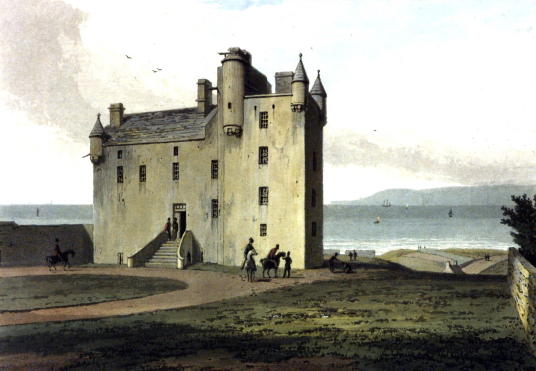
What others said about us!

Testimonials / Referrals:

Previous clients have said that they were thrilled with their RobbieMac guided tours and the personalised services we provided.

We thoroughly enjoyed working with them, and love to share their reviews with you!

1). ‘And then you wove your magic’………Robyn, I really want to thank you for all of the help you gave me in planning my trip to Scotland in 2019.You began by asking a few questions about my interests, time available and my ‘must sees’. And then you wove your magic! 

Your knowledge of out-of-the-way places, as well as the main attractions was amazing. Plus you had a great knowledge of Scotland’s roads and discussed road and driving conditions for the time I hired a car.

 One of the things I really appreciated was that you told me when local public holidays occurred, and warned me that some places would be closed. I would never have known these things otherwise!

When we met for you to guide me, again, you were so knowledgeable, but you gave me options, so it was always my tour, as I wanted it, not a standard tour that I had to fit into. I really appreciated that.

 And throughout the process, you were warm and encouraging, which I really appreciated since it was my first time travelling. 

Robyn, thank you so much for sharing your knowledge,  experience and love of Scotland with me.  

I will always be very happy to recommend your tour guiding and planning services to anyone who asks. Best wishes for your future,  Claire B, New South Wales, Australia

2). ‘Many historical and cultural experiences‘…On our several trips to Scotland, Robbie Mac Tours have provided us with a depth of knowledge of the many historical and cultural experiences not only in the Highlands but also of the whole of Scotland and the UK, and particularly the Caithness region. 

They have given us a deep insight into the traditions, way of life and the special uniqueness of the Scottish people, both ancient and modern.  Their guiding, advice and willingness to go the extra mile (or find the side roads to points of interest) have given us amazing memories.  Also their ability to research the history of everything and anything, including genealogy and family history, has given us trails to follow that we may not have thought of.’ Ruth & Kurt J, Queensland, Australia.

3). ‘Wealth of knowledge’…..Robyn (Jobson) has been a wealth of knowledge in starting us on our genealogical journey, tracking our Scottish ancestry. On a personal note she has given me great inspiration for planning our ‘must-sees’ for our future holiday to Scotland. Can’t wait’. Deb B, Queensland, Australia.

4).‘Time here so much fun’…’Robyn and Ross, Thank you for a wonderful day. We loved every moment and are grateful that you took the time to make our time here so much fun. We hope our paths cross again’. Pam & Mike, USA

5).‘Cheerful, meticulous, enthuses others’…’I met Robyn through her family tree research and have kept in touch. Her new business venture is exciting and based in an area of Scotland I know and love. Robyn is cheerful, meticulous, enthuses others and understands the need for prompt responses. I wish RobbieMacTours every success. Sue S., Norfolk. UK’

6).‘She arranged a family homecoming’….’I first got to know Robyn when I was doing the genealogy of my husband’s family.   She arranged a family homecoming in a hotel in Ayrshire. It was a terrific weekend. We saw a massive family tree, heard from family members who had stories to tell, swopped presents and had a ceilidh complete with a piper.

Next day a bus was arranged for us all to go to the family home where the family originated. On leaving we were given a DVD and loads of information on the family. All this was arranged by Robyn.

Can I say I do admire and thank her for the amount of work she put into the week end and how welcoming and friendly she is. I cannot praise her enough for all the work she has and still does in keeping the family informed about matters’. Linda & Bob McB., Ayrshire, Scotland

7).‘The breadth and depth of their knowledge of Scotland is echoed in their passion for this beautiful country’…..’Robyn and Ross are truly wonderful people. The breadth and depth of their knowledge of Scotland is echoed in their passion for this beautiful country. Our sincere and heartfelt thanks for helping us find, and guiding us through this amazing Scottish adventure. Our first encounter with Scotland was richer and more intimate than we could have imagined thanks to your expert guidance. We’ll be back for more!’    Kim & Leonie R., Qld Australia

8).’Knowledge of the area and the history’….I  recently spent eight days in Caithness with Robyn and Ross and their knowledge of the area and the history was truly amazing. I would not hesitate to recommend them both for a truly amazing tour. I cannot thank them enough for a wonderful experience. Thea W., Gold Coast, Australia

Queries & Bookings:

Ross & Robyn

Enjoy traditional Scottish Highland Games!

Experience a day at the local Games

Traditional Highland Games

Wishing you beautiful moments, treasured memories, and all the blessings a heart can know for 2021. Happy New Year!!

Certain aspects of the games are emblematic of Scotland eg. bagpipes, kilt and the heavy eventsespecially the caber toss! While centred on competitions in piping, Highland dancing, and heavy athletics, the games also include entertainment and exhibits related to other aspects of Scottish and Gaelic cultures.

Braemar Highland Games Massed Pipe Bands, in front of HRH Queen Elizabeth

Probably one of the smallest is the Mey Highland Games – but locals here (including us) consider that it is the most intimate and interesting event on the Games Calendar – and besides, we have Royal Patronage! Initiated by HRH Queen Mother 50 years ago, it is now attended by HRH Prince Charles, the Duke of Rothesay who still spends his holidays here at the Castle of Mey during the games (also the same date as his late grandmother’s birthday! These are ‘our local games’ and of course I also guide at Castle of Mey, so I admit to being more than a tad prejudiced!

There are 60 notable Highland Games events held annually across Scotland. The Cowal Highland Games held in Dunoon are the largest Games in the world, attracting about 23,000 international visitors.

What are Highland Games?

Scotland is renowned for its Highland Games which are some of the most popular events on the summer calendar for tourists and locals. They are very popular with Scots and countries with a large Scottish diaspora – as a way of celebrating Scottish and Celtic culture.

Man o’Mey preparing to toss his caber (or how to lift a power pole)!

What’s the history of Highland Games? 

These were always events where the strongest and bravest soldiers in Scotland would be tested – but the gatherings were not only about trials of strength. Musicians and dancers were encouraged to reveal their skill and talents and so be a great credit to the clan that they represented. The modern Highland Games are largely a Victorian invention, developed after the Highland Clearances.

When are Highland Games held?

One sad fact is that in an unprecedented move in 2020 ALL Highland Games, together with the World Pipe Band Championships, Royal Edinburgh Military Tattoo, Summer Festivals and Hogmanay Street Party in Edinburgh were all cancelled – due to the COVID pandemic! This has been a really challenging year for all tourism both in Scotland and in the rest of the world. We pray that things will return to a new sense of normality in the 2021 season!

Normally the Highland Games’ season begins late May and peaks in July and August, with over 30 events each month – and comes to an end by the end of September (with the last always the Invercharron Highland Games). Most (but not all) Games are held at the weekend, either on a Saturday or a Sunday.

Highland Dancing competitions

Check the 2021 HIGHLAND GAMES CALENDAR below to find where and when they are scheduled, and which Clan Games they are if you have allied families. This should help you make your mind up on itinerary, dates, timings and accommodations. However it does not matter which games you attend if you are simply looking for an ‘authentic Scottish Experience‘?
2021: Calendar of Highland Games

What can we expect to see?

Highland Games events may vary a little from district to district, but the traditional events remain the same. One for the girls – they are always noted for their unique photo opportunities and sight of men in kilts, pipebands, and sporting and athletic events – many of which involve proving their strength with throwing and lifting:

Mey Games might be small – but there’s lots to take in at once

• Caber Toss
• Hammer Throw
• Stone Put (a HUGE rock)
• Weight for height/Weight over the bar
• Maide Leisg
• Tug o’war
• Piping Events & Massed Pipe Bands
• Athletic Events
• Highland Dancing
• Children’s Entertainment
• Fun Run
• Stalls & Food
• Whisky Bar

Wow! Just Wow! The caber toss is arguably the most famous and popular of the heavy events, and is the image conjured up when people mention Highland Games – it sees kilted competitors struggle to hold a HUGE tapered pole made of wood (comparable to a long wooden electricity pole) and then try to throw or toss, it as straight as possible without knocking anyone silly in the process!

Be aware that there are multiple events running at the same time around the ring, so you need to listen to the man on the microphone, follow the crowd and have your camera ready at all times! Also, you just never know who you will see.

The modern-day Highland Games are made up of a wide variety of activities and events. Amongst these are the rows of clan tents and vendors of Scottish made goodies including local specialty foods, regional crafts and of course the local whisky.

I will always fondly remember our first games in Inverness, at Bught Park near the banks of the River Ness. It was a dreich day, cold, wet and miserable to start with – but the sound of the pipes perked you up…….we found a wee van and the man was selling bowls of steaming hot traditional oat porridge. It went down soooo well!! Only in Scotland!

The various Clan Societies make their Highland Games the main event for seasonal activities. Visitors can find out information about their clan or buy a kilt or special equipment. If on one of my tours or research projects, I make prior arrangements for meetings etc to advance your clan connections and research (this is in addition to any tours through clan lands, family cemeteries and kirks, old crofts or ruins in their homelands).

You never know who you might run into!

There’s always something going on for all the family at the games……and don’t miss the salute to the Games Chieftain!

Who can compete at the Highland Games?

A Highland games athlete is a blend of kilt wearing strongman, track athlete and weight lifter. He/She must be able to throw large, heavy objects a long way – but first be crazy enough to try. The timid, weak and frail need not apply!! There are individuals and teams who come regularly from overseas for various championships. Just listen to the accents as you stand and admire their talent! I just love a man in a kilt – don’t you girls?

What to wear at the Games?

Performers and athletic competitors at Highland Games sporting events, particularly the heavy events like team tug o’war or caber tossing wear sports or tank shirts (or none) with their ‘casual kilts’, kilt stockings and sports shoes. They seldom wear a sporran on the field as it gets in the way. The pipe bands are always turned out so well in formal kilt.

Casual kilt day

For visitors, kilts or casual clothes and flat comfortable shoes are recommended. Do pack in a windproof rainproof jacket in case the breeze picks up. Jeans are quite suitable. And if you must have a bag try to make it a backpack as you will have to carry it all day, and you will need your hands free at times!

What Food and Drink is available?

Various food and drink vendors in vans, tents or stalls will offer assorted types of traditional Scottish refreshment and sustenance, or standard modern fare if you are to hesitant to try the local stuff. Do try all the local specialties, they’re wonderful!

Do try all the local food and drink

Will the Scots Diaspora attend Highland Games?

Yes! The Scots Diaspora is spread worldwide and that includes my McBirnie families who emigrated to Canada, USA and Australia while one branch remained in Scotland. With them, they have taken their culture and retained Scottish traditions. Highland Games are a popular annual event in their areas too – and Scots descendants love to attend, either as visitors or as competitors – and now likewise back in Scotland too! The Diaspora is of course found in various Scottish look alike and named locations including: Australia, New Zealand, Canada, USA and Switzerland

The Highland Games are truly one of the most memorable but overlooked, interesting activities in The Highlands! Contact us regarding accommodation or tours (private or group) for your holidays – whatever the season in the Highlands and Far North of Scotland.

Can I include Highland Games in a tour with RobbieMac Tours and Ancestry? Yes!

The Highland Games are truly one of Scotland’s great sporting traditions, and there are many chances to catch this typically Scottish event across the country from May-September. We hope you have the Highland Games on your ‘to-to list’. Do ask about or book your tours and accommodation well in advance, as availability can be at a premium throughout summer!

Yes, we would be happy to factor in a day at local Highland Games with you if there are Games on in the Highlands or any of the locations you wish to visit, and if you are contemplating ancestral research and ‘walking in the footsteps of your ancestors’, just ask. Happy to provide you with lots of options and ideas to make this a truly memorable Scottish experience. In May 2021 see us return to some sense of normality.

Queries / Bookings:

Ross & Robyn

RobbieMac Tours & Ancestry Services © 2021


Come to Caithness to see ‘The Mirrie Dancers’

What are the Mirrie Dancers?

Well, let me tell you about the ‘Mirrie Dancers’ of the north . Where you come from, you’ve probably known them by the more familiar names of Aurora or the Northern or Southern Lights. However the Caithness term for them is ‘The Mirrie (Merry) Dancers’. Contact us for more information. No doubt you’ve seen posts I’ve shared on Facebook from brilliant regional photographers with magical glows of white, green, pink or purple glowing in the dark midnight skies over Caithness or the Northern Highlands. If you would like to see great photos of the ‘mirrie dancers’ by a local, I certainly recommend you seek out Marceij Winijchek’s photography on Facebook! Yes, the lights or mirrie dancers can be seen elsewhere around the Highlands or the rest of Scotland…… but where, just depends on where the coldest, clearest night sky can be found (no lights, no cloud, no rain)! Wow, there have been sightings of the mirrie dancers this week, from Caithness to the Islands to the north and the west of us! I was lucky enough to see them too, at around 3:00am on two consecutive mornings. Amazing and so unexpected as there has been rain and cloud for days on end – quite a show out over the Pentland Firth, with rays with pulsing spikes in a purple, green and lots of white…..and my camera battery was flat (considered essential to get the special settings needed)! But they do not always look like the photos, to the naked eye. In actual fact the aurora if showing in all its’ glory, is best captured on really long camera exposures, out on very cold still, clear nights with a dark glow. If you do see any green, then that’s the oxygen, struck by electrified particles from the sun. The further north, the greener it is (particularly in the islands and Far North Caithness) – just as we saw it that first time of our life, in magical Lapland’s Arctic skies. The pinks and purples make great photographic contrast but tend to be seen more the further south in Scotland you go. If you strike it lucky the Mirrie Dancers can flicker and dance across the sky, or simply glow like a well lit city. The sense of wonder is hard to describe! It has been reported that some hear a slight buzzing sound comparing it to the rustling of silk – but we’ve never heard it. While the Sami, the traditional people of Lapland say that it sounds like reindeer leg joints when they run! Be prepared for an incredible experience. It will touch your heart and leave you speechless. Seeing them with your own eyes somehow changes your view of the world, of nature and of life.
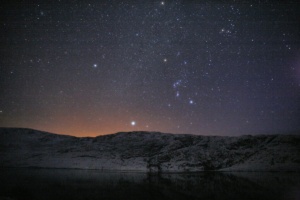
Can we see them anywhere?

Yes, though they are seen more frequently at higher latitudes and places closer to the poles. To view them, find a dark area and stand with your back to any lights – and look in the direction of the closest pole (obviously, the northern horizon in the northern hemisphere, the southern horizon in the southern hemisphere).

Can we see them at any time?

Yes, but here in Scotland we can’t see them with the naked eye unless it’s dark so wait for long, cold, dark sky nights in our winter – noting that we have really short days in winter, as it starts to get dark from around 3:00pm. Generally expect to see the dancers in the depth of winter from December to February, though like this year they can be visible earlier, starting around September if there’s an early cold spell of weather.

What causes the colours and patterns?

Now lets get real techie here! Colours and patterns are from the ions or atoms colliding with the atmosphere and are affected by lines of magnetic force. Displays come in many forms, including rippling curtains, pulses of waves, or steady glows and flares.

What is the difference between the Northern Lights and Southern Lights?

Actually both the northern and southern lights are types of Auroras (and the aurora is the mirrie dancers to us). The difference? One occurs near the south pole, and the others in the north.

Aurora Facts

• Auroras have been observed since ancient times. • Auroras tend to be more frequent and spectacular during high solar sunspot activity, which cycles across approximately every twelve years. • Some auroras are particularly spectacular (see local newspapers and Facebook). • Legends abound in northern cultures to explain the dancers/aurora/northern lights. • 1896, a Norwegian theorised that auroras were triggered by electrons from sunspots. • Scotland is the capital for UK aurora sightings, and Norway for European sightings. • Earliest known account of northern lights appears to be from a Babylonian clay tablet from the official astronomers of King Nebuchadnezzar II, 568 BC.

Caithness Dark Sky Discovery Sites

Where is our best local spot to star gaze? Well in Caithness it is far closer than you think……The Castlehill Heritage Centre in Castletown only ten miles away from us here in Canisbay, is a designated dark sky Discovery Site. Viewing is just great down at the Harbour behind the building and overlooking the Pentland Firth and Orkney in the background. Designated Dark Sky Discovery Sites are a nationwide network of UK locations that provide great viewing opportunities and are accessible to everyone.

Caithness Astronomy Group list of Highlands Dark Sky Discovery Sites

Camas na Sgianadin – Broadford, Isle of Skye, IV49 Castlehill Heritage Centre –  Castletown, Caithness, KW14 8TG (our local site) Clan Donald Centre – Armadale, IV45 8RS Glen Canisp – Lochinver, Sutherland, IV27 4LW Isle of Coll – Arinagour, Isle of Coll, PA78 Isle of Coll – Cliad Football Pitch, Arnabost, Isle of Coll, PA78 Isle of Coll – RSPB Totronald, Coll, PA78 6TB Jim Savage – Lowden Observatory, Culloden Battlefield, Culloden Moor, Inverness, IV2 5EU Knockbreck – Tain, Gillen, IV55 8GP Kylerhea – Otter Haven Car Park, Kylerhea, IV42 8NH Leitir Easaidh – Little Assynt, Lochinver, IV27 Stein Jetty – Stein, Isle of Skye, IV55 8GA Observatory – Kinloch Forest, Isle of Skye, IV43 8QY Trumpan Car Park – Trumpan, Isle of Skye, IV55 8GW Walk and Wild – Melvaig, Wester Ross The Putechan Hotel – Bellochantuy, Argyll, PA28 6QE

What else can we see in the night sky?

As they say, a clear night sky offers an ever-changing display of fascinating  ‘sky watching’ — in addition to the mirrie dancers, you could see stars, constellations, bright planets, the moon, and occasionally meteor showers or even the International Space Station. As the third brightest object in the sky the space station is easy to see if you know what to look for, and when to look up. It looks like a bright star moving quickly from horizon to horizon. However as suddenly as it appears, it disappears. It is due back in UK skies in November 2020. UK Space Station Timetable: https://www.glosweather.com/isslive (‘google’ for other countries). Observing the night sky can be done with no special equipment, although a Sky Map can be very useful: https://www.timeanddate.com/astronomy/night/@2641342 (search on the name of nearest town to you). While you’re at it, check out the Aurora Watch UK site to prepare yourself for the experience – before you come. This is truly one of the most overlooked but interesting activities in Caithness! Contact us regarding accommodation or tours (private or group) during your winter breaks in the Far Northern Highlands of Scotland. Why not tie it in with a North Coast 500 tour, or a quiet staycation, or research your family ancestry and ‘walk in the footsteps of your ancestors’! Photography with thanks to: Visit Scotland, The Scotsman & R Jobson. ♥ RobbieMac, Your Highlands’ Guide  

Queries / Bookings:

Ross & Robyn RobbieMac Tours & Ancestry Services © 2021 RobbieMac Tours © 2020

Caithness Legend – The Selkie of St Trothans, Olrig

Caithness Legend – The Selkie of St Trothans, Olrig

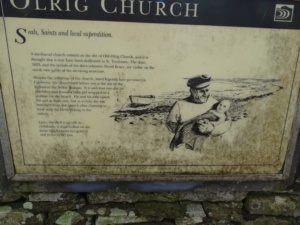
Did I really feel a frisson of excitement or was it nervousness as my friend and local, Jennifer and I pulled open the gate at the entrance of the Olrig Cemetery with its’ old ruined Kirk of St Trothans at Olrig, not far out of Castletown. While I had heard the local stories about a ‘selkie’ grave, I hadn’t managed to find this grave on my own accord until now.

Olrig Cemetery

At Olrig there are effectively three cemeteries bounded by old stone walls – the ancient, the quite old and the modern! The name Olrig derives from the Old Norse meaning ‘son of Erik’  – around the time when Caithness was called Katanes and  it, and Orkney and Shetland were all part of Norway.

The roads and church are signposted, but it took help to find the way to the grave. It goes without saying, that the influence on locals’ lives by the church was strong in those times, and legends and stories were common, no more so than in Castletown.

So before I go further, what is a selkie you may well ask?  The word selkie means ‘seal’ in both Old Scots and Norse and of course Caithness was a major player in the Viking Kingdom.

Legend of the Selkie

Selkies are mythological shapeshifting (the word used today is morphing) creatures that are also found in Faroese, Orkney, Shetland, Icelandic, Swedish, Irish and Scottish folklore. The Caithness selkie was half-woman, half-seal and she is buried in the ancient graveyard in Olrig. In some parts they are also referred to as sylkies, selkie folk and in Shetland as mermen or merwomen.

According to the old stories, selkies were able to become human by taking off their seal skins, and can return to seal form by putting it back on. Stories about the selkies are romantic tragedies and vary slightly from place to place!

Sometimes the human will not know that their lover is a selkie, and just wakes one day to find them gone. As many have heard, that any children produced by a selkie-human union could be distinguished by having hereditary webbed hands and feet. The selkie mothers would nick away at the web in an attempt to be rid of it, and thus keep the secret from others! There are still families or descendants of families who actually believe they have these hereditary selkie traits.

Castletown Myths and Legends

The Castletown legend is the most common story of the man who steals a female selkie’s skin when he finds her naked on the sea shore. He compels her to become his wife. But the wife spends her time longing for the sea, and was often seen gazing longingly at the waters. She bears several children by her mortal husband, but once she discovers her skin, the pull is too hard and she immediately returns to the sea and abandons the children she loved.

However in one children’s version the selkie revisits her family on land once a year, but in the more common version she is never seen by them again.

Sometimes the human will not know that their lover is a selkie, and wakes to find them returned to their seal form. In one version, the selkie wife was never seen again by her children, but the children would sometimes see a large seal that would come up and greet them plaintively. Other times the common version, the human would hide the selkie’s skin, preventing them from returning to seal form.

The Selkie Grave

Now back to our selkie grave ….. there is a plaque on the cemetary gate with the legend.  Read and enter! The ruins of St Trothans which was built in 1633, are now well hidden in the trees and the whole place has an eerie sense about it! That isn’t helped by the fact that the ruinous walls are also quite overgrown with ivy which seems intent on taking it over forever!

But we were on a mission. To find it…..as you enter the cemetery gates, walk straight ahead then turn toward the ruins. The more noticeable pirate graves are on the ground, lying flat, with a skull and crossbones on. Some believe them to be either criminal or Masonic graves – but who knows. They lie about two or three rows away from the old church and close to the selkie.

Opinions vary, but pirates sounds much more romantic to me given that Castletown is on the Pentland Firth, a major and most dangerous tidal waterway –  and with many stories of piracy!

We get there and what a surprise – it is just a wee grave, child sized with a strange hole in the stone on top of it. Our selkie in this legend was apparently found as a baby swaddled in a sealskin. She was later banished from the kirk as a devil worshipper and ultimately died while giving birth to her first child.

The hollow on the stone to cover her grave, is said to never dry out. It is said that if you put your foot in the hole and make a wish it is supposed to come true, or that it will rain! Depends on who tells you the legend of the selkie.

What I do know is that if you put your hand in the hole it gets wet and no, it didn’t rain that day!

Other similar Legends

One Scottish legend from another location, believes that selkies were creatures that can take the form of seals or humans, depending on whether they were in the water or on land. In that version the sellkie was a mermaid.

No matter where, when their seal-skins were discarded the selkies became extremely attractive to humans and it was not uncommon for relationships to form – with the selkie making the decision to stay on land. The folk-tales frequently revolve around female selkies being coerced into relationships with humans by someone stealing and hiding their sealskin, thus exhibiting the tale motif of the swan maiden type.

But no matter how strong the selkie’s ties with her mortal family were, she would always pine to return to the sea. So to avoid this possibility the men would steal the seal-skins and hide them. Without their skins, the selkies were trapped on land with their mortal family!

One legend tells of a selkie woman who had been married to her mortal husband for many years and had several children by him. One day, one of her young sons came across the seal-skin which had been hidden away in his father’s hiding place and, curious about what it was, took it straight to his mother. Delighted, she seized the skin from him, put it on and slipped back into the water – leaving her family, home and distraught husband behind forever. Such a sad legend no matter which version you hear.

Olrig the most haunted place in Caithness

On the way out, we passed an ancient stone collection container inside the gate! Olrig, incidentally, is one of the most haunted places in all of Caithness. Some believe that bad luck follows you out of that cemetery time and time again. Luckily I did not hear that part until much later on!

Local myths and legends are really fascinating and you can usually find an element of truth if you dig deep enough. I’ve since heard of a number of other Olrig and Castletown legends, including: a Mummy on the loose; The Valkyries in the hill; The Green Lady at Olrig House; ; the bagpipes of the Piper skirling at all hours on Windy Ha; the lost Kirk; and of course the Tunnel!

This is truly one of the most haunted places in Caithness! Ask about our tours!

RobbieMac, Your Highlands’ Guide  

Queries / Bookings:

Ross & Robyn

RobbieMac Tours & Ancestry Services © 2021


Gabaldon’s Highland Odyessy

This is a blog for our Outlander fans who are interested in the historic aspect of Diana Gabaldon’s ‘Outlander’ series.

It seems to be a trend until now, that visitors came to Scotland with the agenda of going to see the ‘sets hired for the films’ and not the real locations.

My agenda has been to spread the idea of coming to the Highlands and visit the ‘real sites’ visited by Gabaldon when researching for her story and those that figured in the tragic history of the Highlands.

This was to be the setting for the love story between Claire Randall, a married woman and Sassenach (an outlander)  and Jamie Fraser a young highlander in ‘Outlander’ the first in her famous series (initially called Cross Stitch).

Gabaldon spent a great deal of time in the Inverness area understanding the Highlands torn by war and clan feuds.

The ‘real’ Outlander connections tour would include: Culloden Battlefield, Clava Cairns, The Gaelic Church and Old High Church Inverness for starters. Depending on what length tour, you choose, you can be transported through time following Claire from the first very beginning, through the Battle of Culloden which was central to the story, and the agonies of post Culloden.

It’s a long complex story, and not easily experienced in one day tours! Next to design a followup to the popular one dayer. Watch this space.

Will BREXIT affect your holiday in Scotland?

Some great info and clarity from the people at TUI regarding the impact of BREXIT on your holiday in Scotland. In short – no worries, just go ahead and book!

How will ‘BREXIT’ affect my holiday?

Whether you’ve already booked your holiday, or cruise, or you’re just thinking about planning your next getaway, you’re probably wondering what Brexit will mean to you.

Should I be concerned about my holiday with the uncertainty of Brexit?

We understand you may be anxious to find out more about what may happen with Brexit, to help you plan your holiday. The good thing to know is that the European Commission has said that planes leaving from the UK will still be allowed to fly over the territory of the European Union, even in a no-deal scenario. So you can rest assured that your flight should still go ahead as planned. Tour operators will continue to operate tours to all destinations, including those within the EU, so you can still book holidays with confidence.

Will flights still operate?

You can rest assured that, regardless of the Brexit outcome, planes will still be able to fly between the UK and the EU. When and if a deal is agreed, we’ll go into a transition period, meaning everything will stay as it is until the end of December 2020 and flights will continue as normal. Even in the case of a no-deal scenario, the European Commission and UK government have said that UK airlines will still be able to operate flights between the UK and the EU. The UK government has also agreed that airlines operating out of the EU will be able to fly into the UK.

Will I need a visa to travel to the EU after Brexit?

On 4th April 2019 the European Parliament approved legal changes to ensure that UK citizens will not need a visa to travel to the EU for short stays after Brexit – even in the event of a no-deal exit. ABTA is also providing advice to travellers about visiting the EU after Brexit, with the latest information available at: abta.com/Brexit.

What happens if I book to travel after 31st October 2019

There is nothing to suggest that you won’t be able to continue with your holiday plans after 31st October. Even in a no-deal scenario, the European Commission and UK government have said flights to and from the UK will still be able to operate. Customers who book a package holiday with a UK travel company can relax knowing that they’ve got the most comprehensive protection as a consumer. If you book a package, your holiday will be protected under the Package Travel Regulations, meaning you’ll have the right to a full refund if your holiday can no longer be provided.

Will I still be able to use my current passport?

For all customers who have holidays booked with us from 31st October 2019 onwards, we advise you make sure your passports are valid for at least 6 months after your departure date, which will ensure you are able to travel in the event of a no-deal Brexit. These regulations will apply to adults and children. Also, if your last passport was renewed before it expired, extra months will have been added to your new passport and these may not count towards the six-month minimum. We strongly advise you check your passport and renew it if necessary, so that your holiday is not affected in the scenario of a no-deal Brexit. You can do this on the government’s website.

Will my cruise be affected by Brexit?

The government has confirmed that cruises will continue as normal after 31st October 2019, even in the event of a no-deal Brexit.

Thanks to TUI Travel, May 2019.

RobbieMac gains Visit Scotland Accessibility Management accreditation!

RobbieMac gains VisitScotland Accessibility Management accreditation.

During recent months RobbieMac has completed Visit Scotland Accessibility Management accreditation!

What does this mean, you ask? This will help us to make our tours accessible and inclusive. Inclusive tourism is hugely important to us, and we are committed  to designing tours and providing services that benefit the widest range of visitors possible.

We are keen to improve our customers’ enjoyment, inclusion and satisfaction! Meaning that our additional services and bespoke accessibility tours will benefit a wider range of people i.e. those with hearing loss, mental or visual impairments, wheelchair users, senior travellers or families with young children.

We are currently working with local businesses to formulate the accessibility services they offer, to allow us to wrap special ‘Caithness Experience’ tours around that. Watch this space….

Old Scottish saying: ‘He who has contempt for food is a fool!’

Here we are back and prepared for the 2019 guiding season. The season here has already started at our beloved Castle of Mey – near the village of Mey of course, on the A836 along the Caithness top end! The private tours, cruise ships and coaches start for me in mid May.

Through the last season, on a number of occasions I answered guests foodie questions, and spoke about traditional Scottish foods and drink and was almost always asked for recipes. So it is high time I shared the full recipe of our favourite Scottish dishes.

Now first, there is an old Gaelic saying which sums up our attitude to food in Scotland….’S mairg a ni tarcuis air biadh’ which translates as ‘he who has contempt for food is a fool’. Meaning that there must be love and enjoyment of Scottish food. Our food is steeped in the landscape, and the history and heritage of this country – which still maintains our unique identity.

Haggis, porridge and whisky are just a few of the memorable foods and drinks produced from our rugged mountains, lochs, streams, fertile farmlands and moorlands.

Firstly,  my ‘definitive foodie list’ – well here it is:

  • Main Course – Haggis with whisky sauce, neeps (turnips) and tatties (mashed potatoes)  accompanied by a wee dram of whisky (for me, an Old Pulteney  finest single malt that echoes the maritime environment here in Caithness).
  • If you don’t fancy haggis, then do ask for venison.
  • Sweets – Cranachan made from the finest whisky with heather honey on toasted oats, cream and Scottish raspberries. Heaven on a plate!

Recipe for Haggis:

Buy ready-made from the nearest butcher!!

I will devote the next Blog to the Haggis itself and include a recipe for those not near a traditional Scottish butcher!

Recipe for Whisky Sauce:

500ml Double Cream

2 tsp Wholegrain Mustard

1 tablsp Dijon Mustard

2 tsp Whisky

Sea Salt & fresh ground Peppercorns

1 tablsp Chopped Fresh Chives

Juice of half a Lemon

  • Heat double cream in pan over heat.
  • Add wholegrain mustard, Dijon mustard and whisky. Stir to combine.
  • Increase heat until mixture is shimmering.
  • Continue to cook 1 – 2 minutes.
  • Remove from pan and ‘taste test’.
  • Stir in chives and whisk in lemon juice.
  • Serve over haggis.

Recipe for Cranachan:

2 oz pinhead / oatmeal

8 oz fresh Scottish Raspberries

1 pint Double Cream

3 tablespoons Malt Whisky

1  tablespoon Heather Honey or any good Scottish Honey

  • Heat pan until hot and lightly toast oats.
  • Crush raspberries with fork into rustic lumps (keep some raspberries aside for decoration).
  • In bowl, whisk cream and whisky to form peaks.
  • Fold in honey, then fold in the toasted oats (hold some aside for decoration).
  • In serving dishes, layer raspberries, cream mix, honey and oats as desired until full.
  • Decorate top with remaining oats and raspberries.
  • Cover with clingfilm and refrigerate 1 hour.
  • If desired, drizzle more honey on top.
  • If desired, add shortbread fingers to be used as wafers.

Slainte! (meaning ‘good health’ in Gaelic)